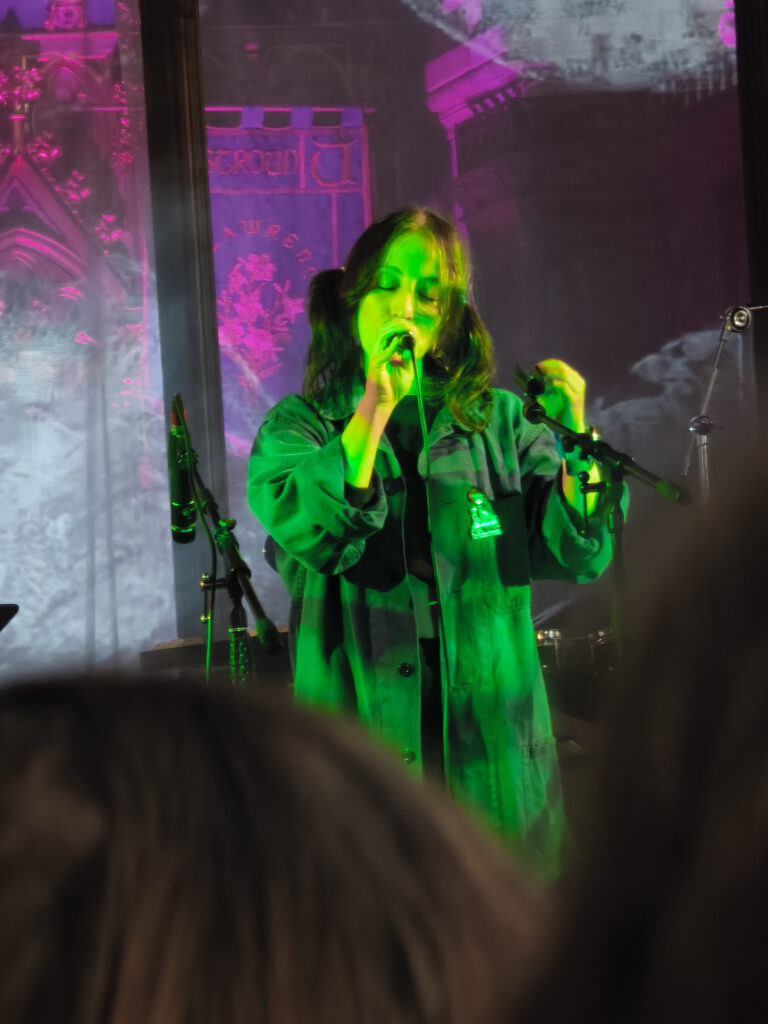
Just what is hidden at Hidden Notes? The middle of the concert auditorium below the stage often provides the best musical experience with a wide stereoscopic landscape. But then the question arises – Just where is the music coming from? And how is it made? For at least two of the artist below these questions are impossible to answer for most of the audience. The answer is hidden from view.
The September pilgrimage to Stroud in Gloucestershire has become part of the end-of-summer routine. Is this my forth time? I’m always well satisfied with just one of the two festival days. The music is “eclectic”. The concert in St Lawrence’s church lasts from 15.30 in the afternoon until 22.30. Ample time for insight into the meaning of that word!
The performers are accomplished musicians. What distinguishes them is their exploration of new ways of presenting their craft. Often this involves recorded accompaniment, and electronica.
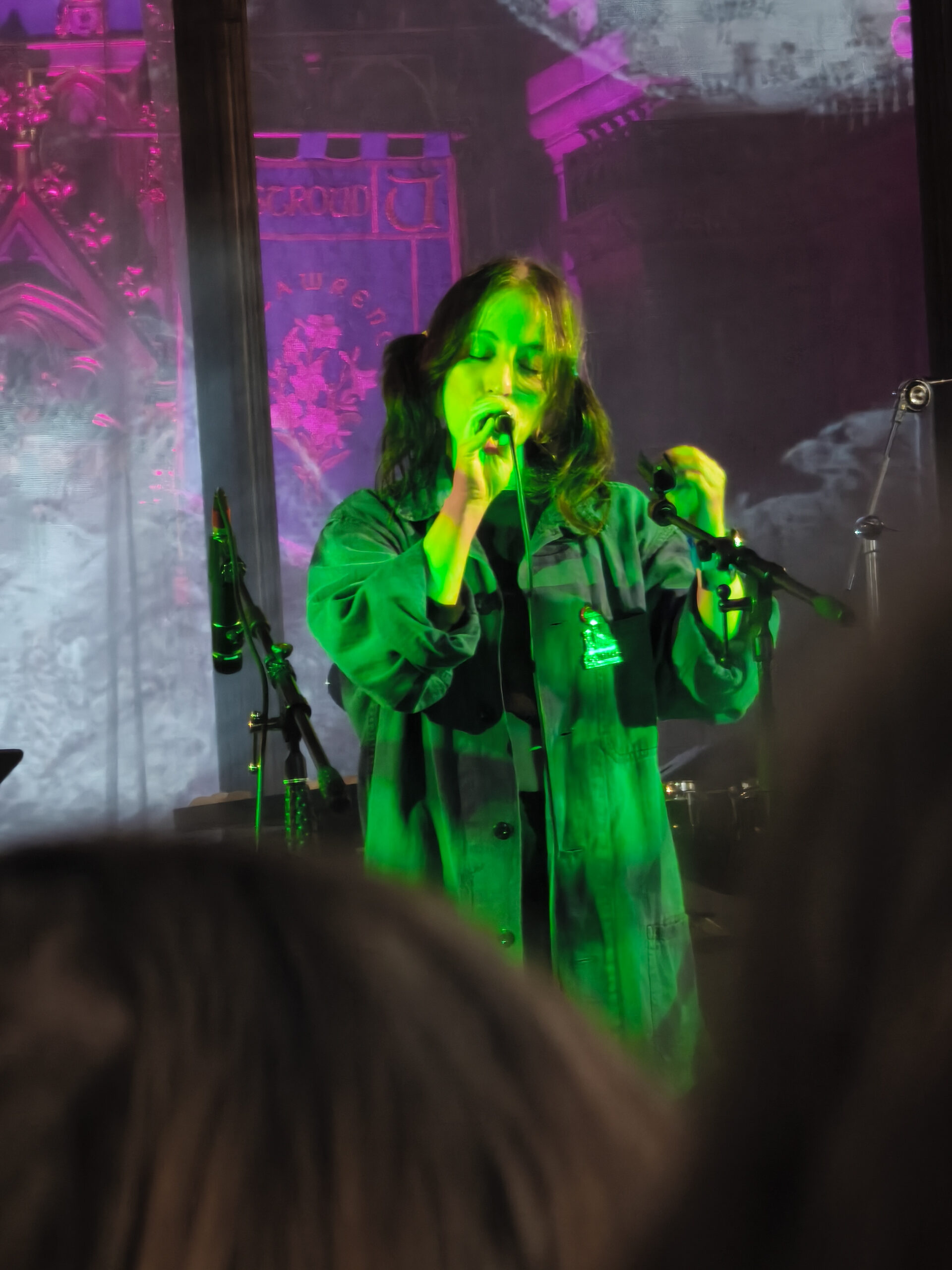
The Sunday afternoon started with Madrigirl marching into the church to the sound of the English bagpipes. Soon a recorded loop was laid down, and voice, and other instruments were played and/or recorded in sync. This artist has a fondness for ‘combining the old and the new’ and introducing a ‘bit of nonsense’ to create nice music. She demonstrated some of her collection of medieval shawms – double reeded instruments and probably waved a Krumhorn around. There is a good example of her music on bandcamp here.
Click here for more on Jude Rees.
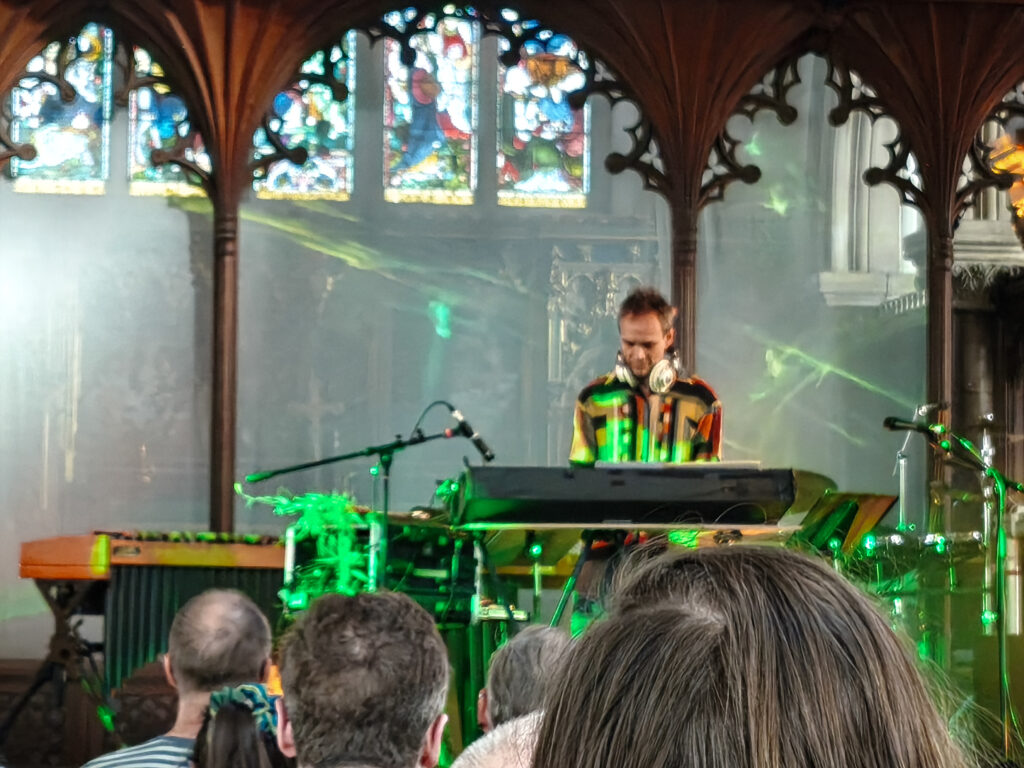
Leon Michener demonstrated his art on a clavichord. The music was so far removed from the original sound of the instrument it would have been better if he never mentioned this. From the audience perspective this man was in a state of bliss surrounded by a lot of electronic noise. Is this dance music for those who don’t? His rabbit hole he says is full of found objects, toys, vibrators, and blu-tak. More on Leon and his roots here.
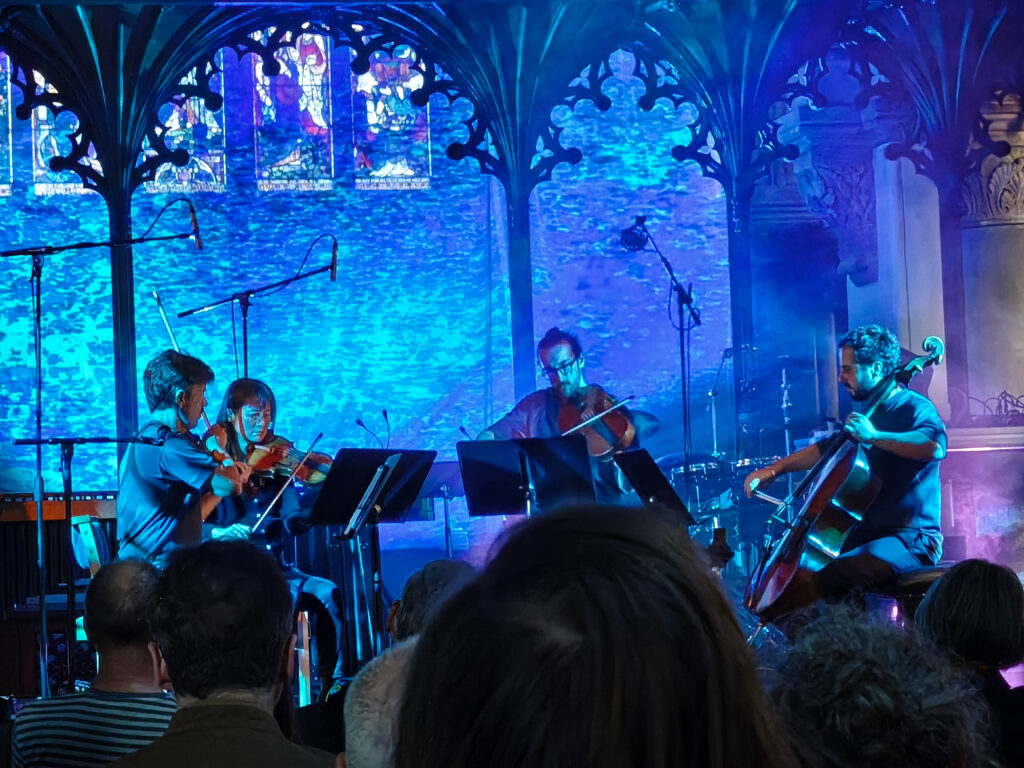
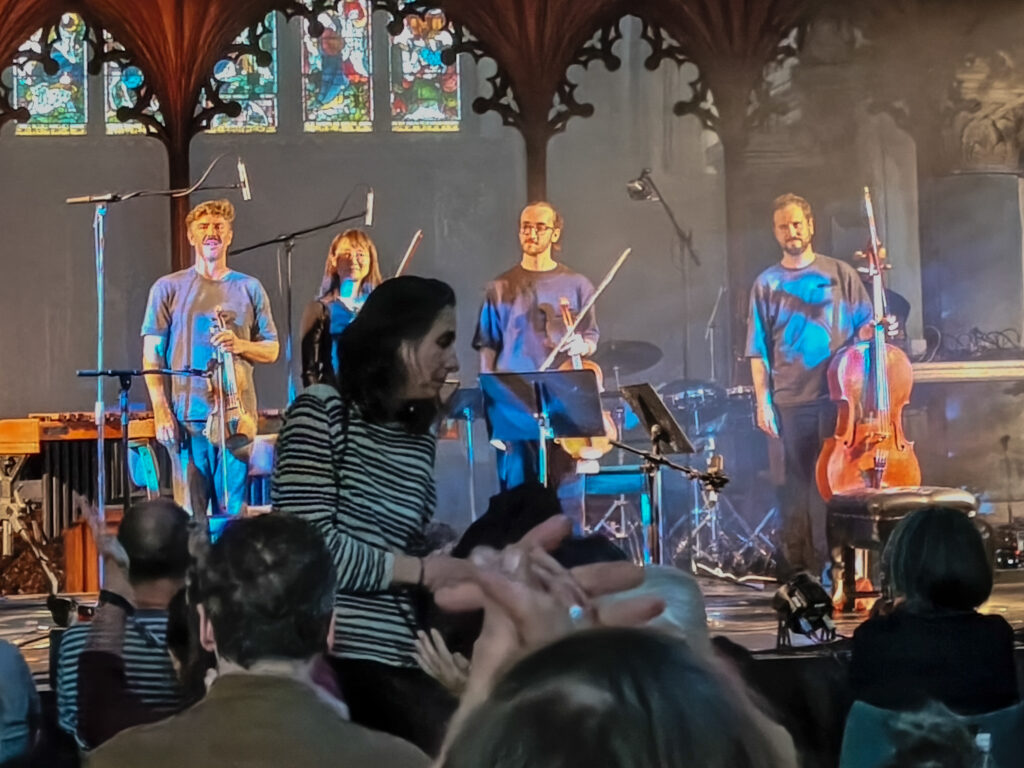
Four members of the Phaedra Ensemble (Phil Granell Violin, Chihiro Ono Violin / Viola, Miguel Sobrinho Viola, Sergio Serra Cello) presented music by Caroline Shaw, Meredith Monk, and Gavin Bryars. They explained how they worked together with these composers in realizing the performances they presented.
In 2027 they are set to be musicians in residence at King’s Place in London. I expect to visit them there for more of their music!
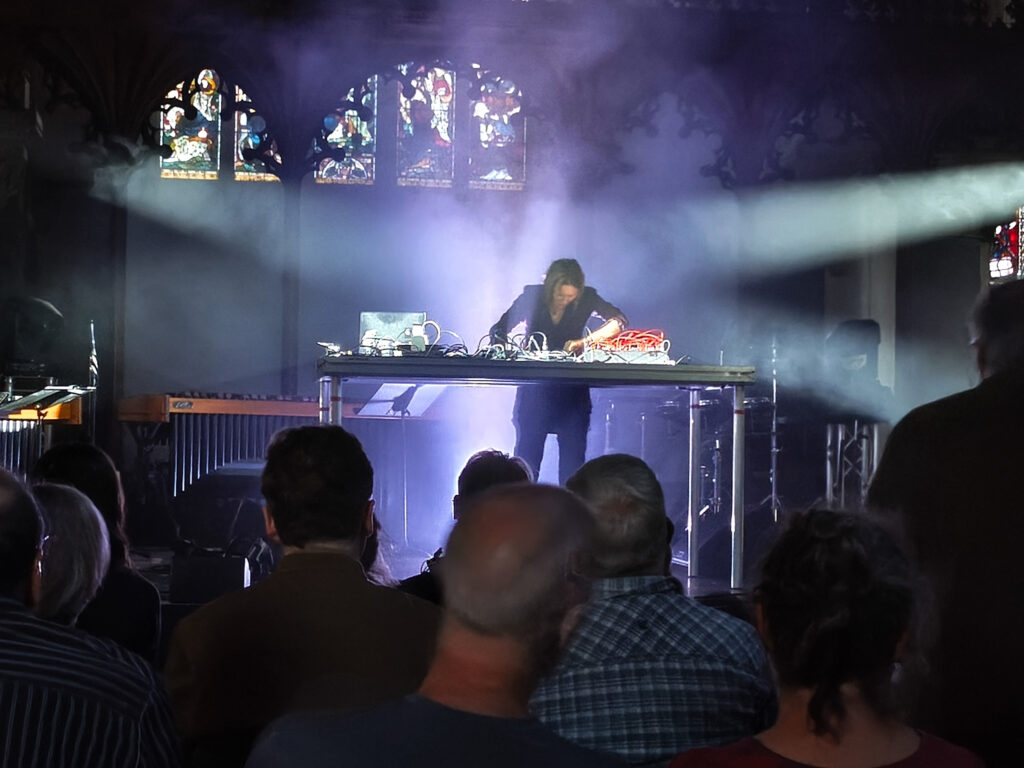
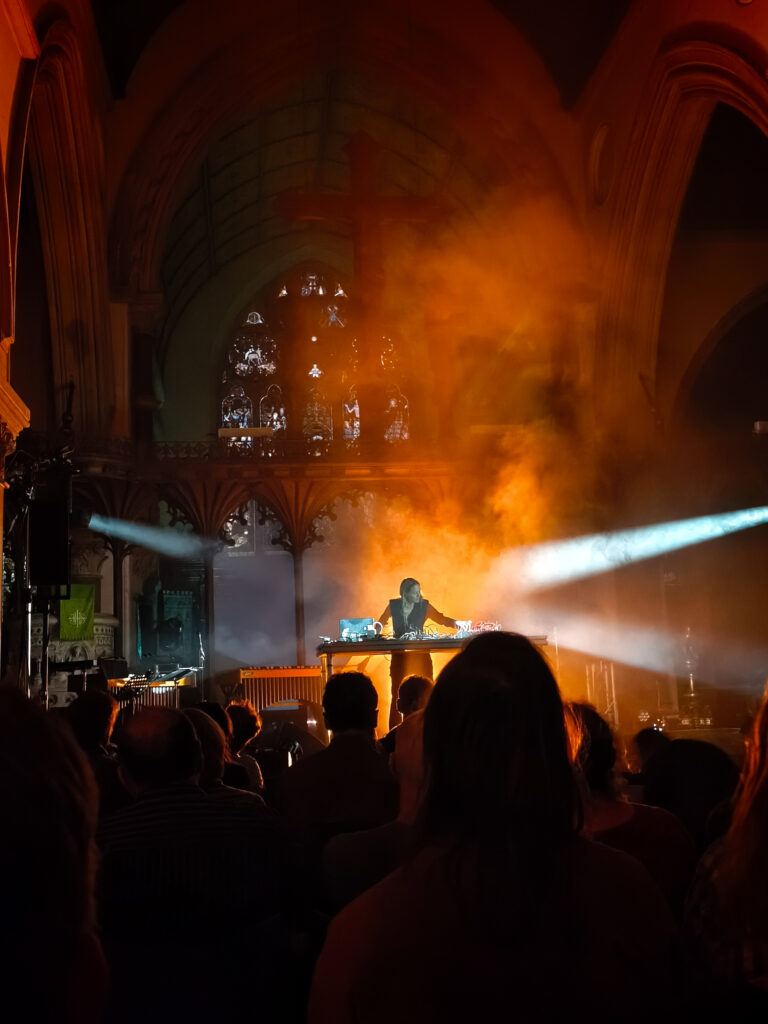
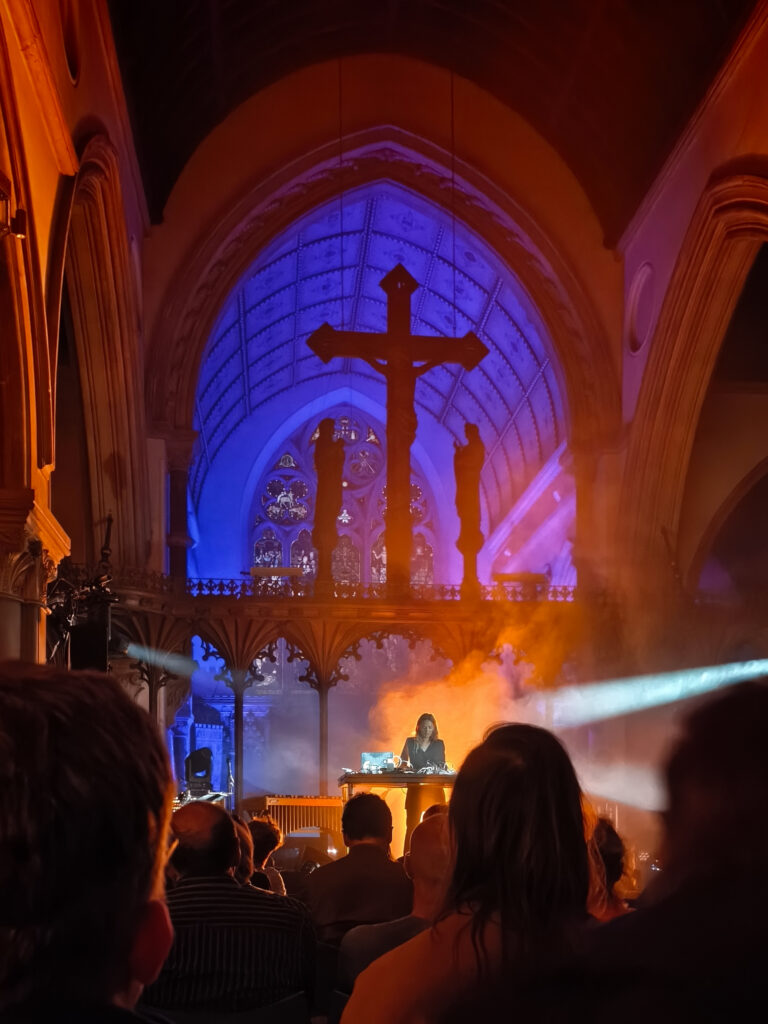
Maria Horn from Sweden was anchored to her deck throughout the performance. Maria focusses on “spectralist techniques” and “site specific source material” in her music. It was hard to understand what she was doing and why!
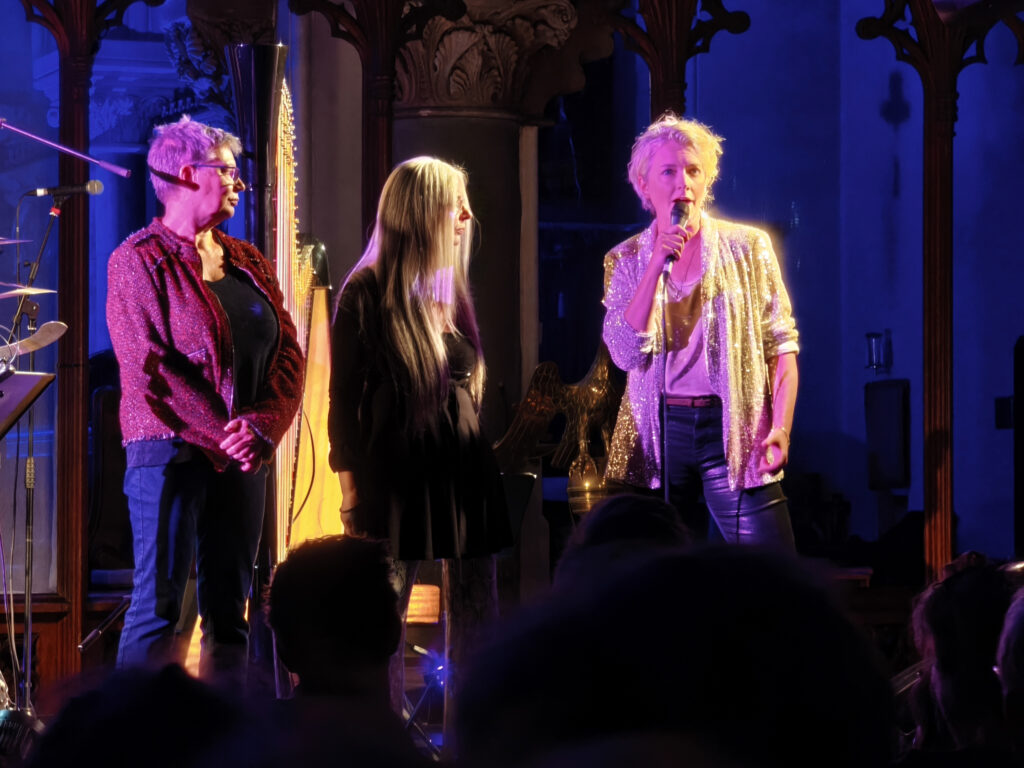
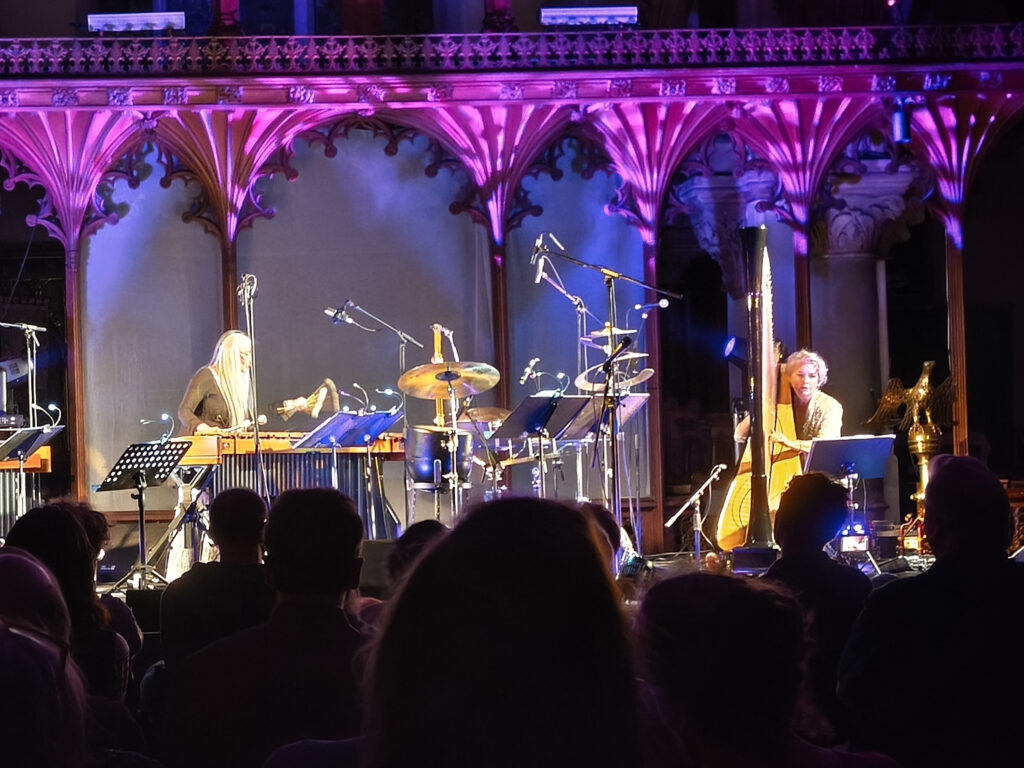
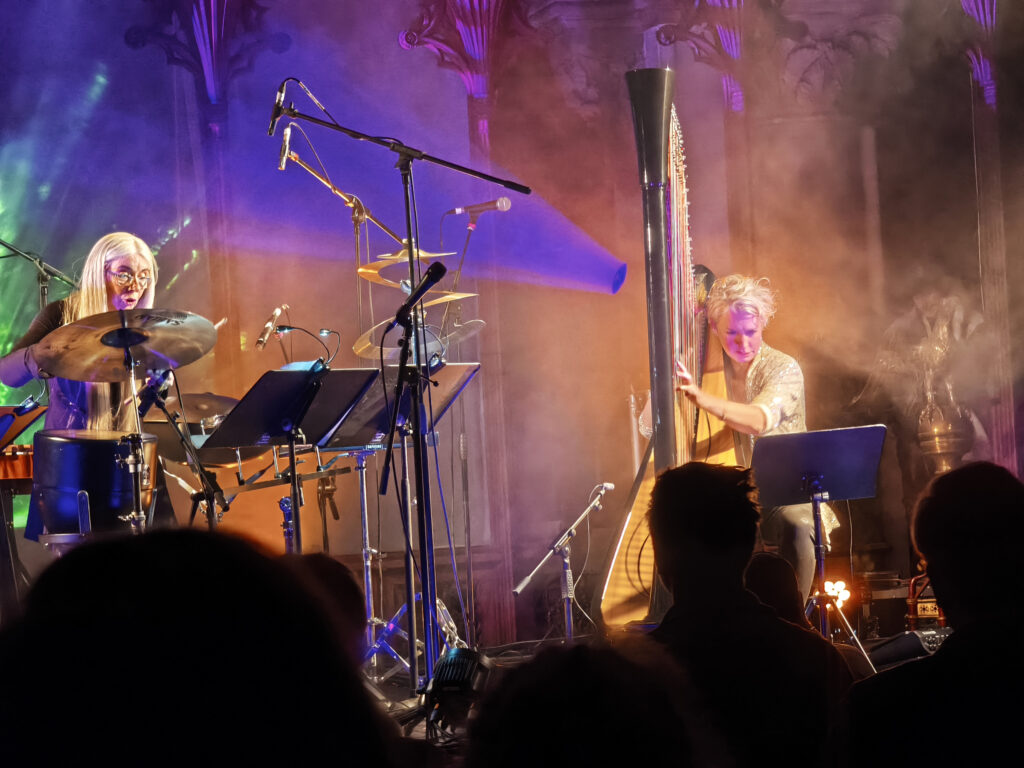
Dame Evelyn Glennie and harpist Catrin Finch premiered a composition made for them by composer Jill Jarman. The 5 movement piece was inspired by re-connections after Covid. The performance was impressive and entertaining with virtuosic work on the harp in particular!
It was interesting to hear these 3 masters talk a bit about the piece and working together.
There’s a lot of information about Dame Evelyn Glennie here. Catrin Finch has her website here.
Here’s a nice clip of Glennie and Jarman working on ideas for their collaboration for the Sound of Science.
The BBC’s “Unclassified” program with Elizabeth Aker will feature some of the more eclectic performance at a future date on BBS Sounds. Look here.